
Last updated November 17, 2026
 Shaker
 Modern flat-panel
 Two-tone cabinets
 KraftMaid
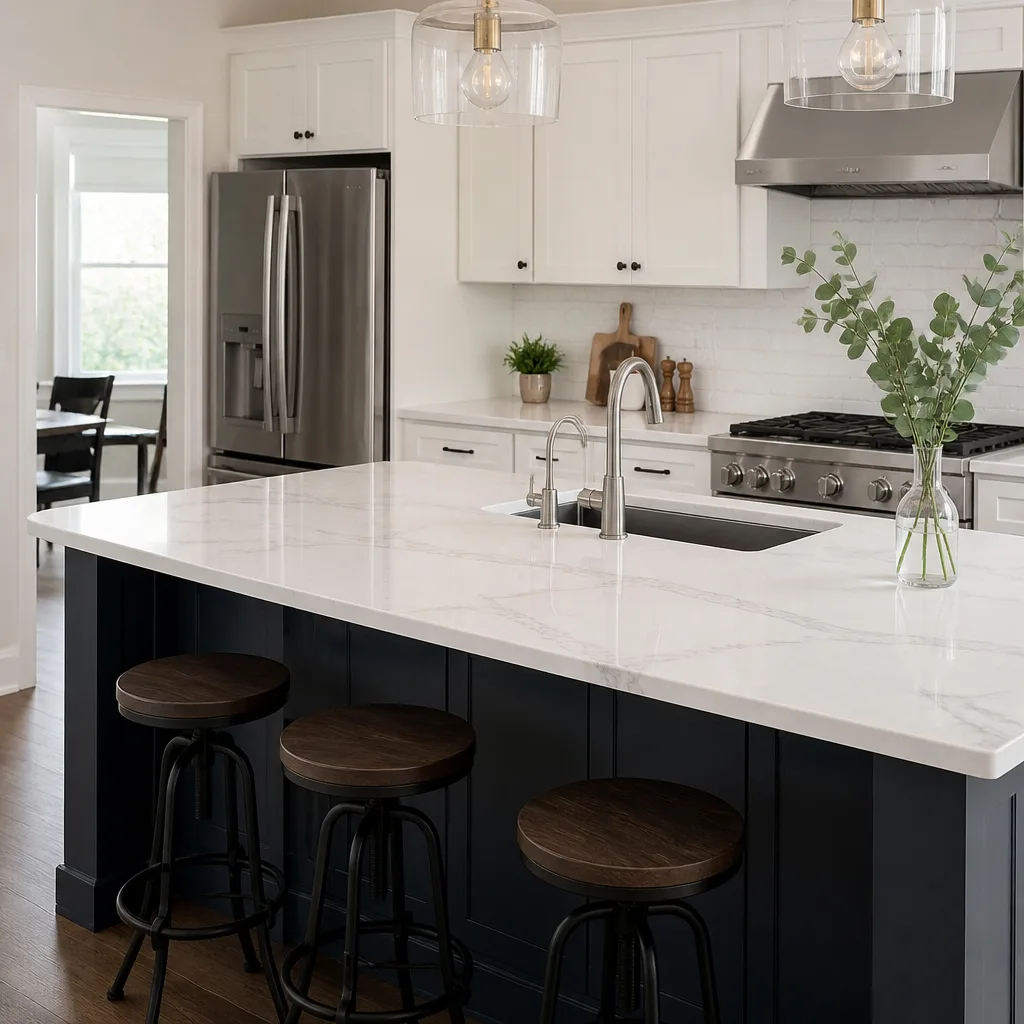 Cambria quartz
 Butcher block
 Open shelving
Free design consultation - KraftMaid and Wellborn cabinet lines, Cambria and Silestone surfaces, and every tier from refacing to full custom laid out side by side
Seasonal Kitchen Remodeling Care for Henderson: Year-Round Homeowner’s Guide
Most seasonal kitchen care advice you’ll find online was written for a place with four roughly equal seasons – a damp spring, a dry summer, a crisp fall, a cold winter. Henderson doesn’t work that way. Our year splits into a long, punishing high-heat, low-humidity stretch from May through September and a mild winter that occasionally drops into a hard freeze. That asymmetry is what actually stresses your kitchen. Cabinet doors can shift on their hinges between January and July as indoor humidity swings, caulk seams open and close like a slow bellows, and countertop adhesive and under-sink plumbing take the brunt. This guide explains what’s happening and gives you a maintenance calendar built around Henderson’s real weather, not a national template. You’ll learn what to check, when to check it, and how to tell the difference between a seasonal annoyance and a call worth making.
Quick Answer
Seasonal kitchen care in Henderson means protecting your cabinets, counters, fixtures and ventilation against a long dry-heat summer and a short, occasionally freezing winter, then handling the transition work – re-caulking, filter cleaning, descaling – at the right moments. The single most important habit is managing indoor humidity swings so wood cabinet joinery and caulk seams stay stable year to year. Most of what follows is inspection and minor upkeep; a few tasks are genuinely worth handing to a professional.
Styles & brands we work with
- Shaker
- Modern flat-panel
- Two-tone cabinets
- KraftMaid
- Cambria quartz
- Butcher block
- Open shelving
Table of Contents
- Why Henderson’s climate isn’t a four-season climate
- Summer protocol: May through September in a Henderson kitchen
- Pre-summer prep for ventilation hoods and ductwork
- Winter protocol: November through February
- Spring transition: the caulk and backsplash window
- Year-round hard water management
- Your Henderson kitchen care calendar at a glance
- When to call a professional
Why Henderson’s Climate Isn’t a Four-Season Climate
If you moved to Henderson from the Midwest or the Northeast, the seasonal care advice you brought with you doesn’t translate. Those regions experience gradual humidity changes spread across spring and fall. Henderson jumps. A week in June can push outdoor temperatures well past 100°F with single-digit humidity, and interior air follows closely once the air conditioning runs hard. Then winter arrives mild and mostly dry, with the occasional cold snap that surprises everyone and strains the parts of your kitchen that touch an exterior wall.
The result is a stress cycle that runs on two tracks at once:
- Moisture cycling in wood. Cabinet doors, drawer fronts and face frames are wood or engineered wood. They expand slightly when indoor air is humid and contract when it’s dry. In Henderson, the swing between a humid monsoon week and a bone-dry July is what moves doors enough to affect hinge alignment.
- Thermal cycling at seams. Caulk and sealant around sinks, backsplashes and countertop edges expand and contract with temperature. Over a few seasons in Henderson, that motion wears the bond until a seam opens.
- Dust loading on mechanical parts. Henderson’s spring and summer dust events push fine particulate into ventilation hoods, refrigerator coils and dishwasher internals faster than manufacturer schedules assume.
None of this is alarming. It’s simply the maintenance rhythm of a desert-valley kitchen. Once you understand the cycle, the calendar writes itself. And if your kitchen is heading toward a larger change, our guide to kitchen remodeling explains how materials are chosen for exactly this climate.
Summer Protocol: May Through September in a Henderson Kitchen
Summer is when Henderson kitchens work hardest and receive the least attention, because nobody wants to spend a July afternoon inspecting plumbing. The heat does the work for you, though. Here’s where it shows up.
The under-sink area against an exterior wall
If your kitchen sink sits against an outside wall – common in Henderson homes – the cabinet cavity behind it holds a temperature somewhere between the air-conditioned room and the baking exterior wall. In peak summer that difference is significant. Warm, dry air in a closed cabinet can dry out the wood around the sink base and accelerate wear on any sealant protecting the cabinet floor. Check that cavity in early summer. Look for discoloration on the cabinet floor, loose caulk where the counter meets the wall, and any sign of condensation on the supply lines. Dryness is the bigger issue here than moisture, but you want to catch both.
Refrigerator coil cleaning matters more here
A condenser coil clogged with dust makes the compressor run longer and hotter. In a temperate climate that’s a slow efficiency loss. In Henderson, where the refrigerator is already working against a hot kitchen and the house is sealed up with the AC running, dust on the coils pushes the appliance harder for more of the year. Pull the refrigerator out and clean the coils at the start of summer and again in late August. It’s fifteen minutes of work that protects a several-thousand-dollar appliance and keeps your kitchen cooler.
Cabinet door and drawer checks
Run your hand along each cabinet door and open and close every drawer in late July. Dry-season contraction is when you’ll notice a door that no longer sits flush or a hinge that has drifted. A quarter-turn on the hinge screw often solves it. If a door has warped noticeably, that’s a conversation about the cabinet line itself – which is exactly the kind of thing a manufacturer warranty exists to address. When we install cabinets from KraftMaid or Wellborn, those brands stand behind their boxes and hardware, which is part of why we specify them rather than builder-grade lines.
Pre-Summer Prep for Ventilation Hoods and Ductwork
Manufacturers publish filter-cleaning intervals based on average household use. Henderson households aren’t average, because our dust events load a hood filter faster than almost anywhere else in the country. If you cook regularly, plan on cleaning your hood’s mesh filter every four to six weeks through the dusty months, not the quarterly schedule printed in the manual.
Here’s a simple pre-summer sequence we recommend:
- Degrease the filter. Soak the mesh filter in hot water with a degreasing dish soap for 15 minutes, then scrub and rinse. Grease and dust together form a film that restricts airflow.
- Wipe the hood interior. Grease collects on the underside and interior surfaces where you rarely look. A warm, damp cloth and a mild degreaser handle it.
- Check the exterior vent flap. Go outside and confirm the damper opens freely and isn’t clogged or blocked. A stuck flap sends cooking moisture and grease back into the kitchen.
- Listen to the fan. A hood that’s gotten louder or moves less air is telling you the duct or blower is restricted. Ductwork is worth having a professional look at, since a poor connection inside a wall or cabinet run is hard to diagnose from the kitchen side.
Ventilation is one of those systems where the full picture matters. Duct sizing, hood placement and cabinet integration all have to line up. That’s the advantage of keeping your cabinet installation and ventilation planning with one contractor, so nothing gets lost between trades.
Winter Protocol: November Through February
Henderson winters are mild, which is exactly why the occasional hard freeze catches people off guard. The risk isn’t sustained cold – it’s a sharp overnight drop that hits the parts of your kitchen that sit against an exterior wall and aren’t well insulated.
Supply lines to kitchen sinks on exterior walls
The most vulnerable spot in a Henderson kitchen during a freeze is the water supply line feeding a sink set into an exterior wall. Cold air penetrates that wall cavity faster than the interior heat reaches it. Before the first freeze risk of the season, know where your kitchen shutoff valve is and confirm it actually turns. If a hard freeze is forecast and your sink is on an exterior wall, open the cabinet doors below the sink so room air circulates into the cavity. Drip the faucet slightly overnight. These are small, low-cost habits that prevent the kind of pipe failure that ruins a cabinet base and the countertop above it.
Acclimating wood cabinets in low humidity
Wood cabinetry needs a period to adjust to its environment before it settles into place, and low-humidity months are the harder part of that adjustment in Henderson. As a general rule, new cabinetry should sit in the room where it will be installed long enough to reach equilibrium with that room’s humidity before doors and drawers are hung and hardware is set. KraftMaid’s installation guidance covers this acclimation step, and it matters more in our dry winter air than in a humid climate. If you’re planning a winter install, this is a conversation to have before the cabinets arrive, not after.
Countertop and seam checks
Winter is when you’ll notice hairline gaps at backsplash terminations and along the seam between countertop sections. Cambria, Silestone and Caesarstone surfaces themselves are stable, but the sealant between them and adjacent materials moves with temperature. If you spot a gap, note it and plan to address it in spring, when the sealant bonds best. A quick guide: any gap wider than the thickness of a credit card is worth having looked at.
Spring Transition: The Caulk and Backsplash Window
Spring is the single best window in Henderson for sealant work, and it’s the task most homeowners skip. Here’s why timing matters. Caulk bonds best to clean, dry, moderately warm surfaces. Do it in July and the heat cures the surface before the sealant can grip, and dust blowing into the joint while it sets bonds debris into the seam. Do it in January and cold surface temperatures slow the cure and weaken the bond. A mild spring day is the sweet spot.
Focus on three places:
- The sink perimeter, where the counter meets the sink rim. Water sitting in a failed bead there is the most common cause of cabinet-base damage we see.
- The backsplash termination, where tile or slab meets the countertop and where it meets the wall.
- Countertop seams, where two sections join. These are usually sealed at installation but can open after a season of thermal cycling.
Older caulk needs to be removed fully before new sealant goes down – not just topped with a fresh bead. Debris and old sealant trapped underneath are what cause the next failure. If you’re not comfortable working a caulk gun around a finished countertop, this is a small job a professional can handle quickly. And if you’re planning a new countertop, ask how the installer finishes the seams before you commit. Choosing your surface from three premium lines – Cambria, Silestone or Caesarstone – is only half the decision; the installation detail is the other half.
Year-Round Hard Water Management
Henderson’s municipal water carries dissolved minerals that leave scale on anything water touches. Left alone, that scale builds up on faucet aerators, dishwasher spray arms and showerheads until flow drops and fixtures start to sputter. A monthly descaling schedule keeps it in check.
Here’s a routine that works:
- Faucet aerators, monthly. Unscrew the aerator from the faucet tip, drop it in a small cup of white vinegar for 30 minutes, rinse and reinstall. Kohler aerators are designed to be removable for exactly this purpose.
- Dishwasher spray arms, monthly. Pull the spray arms out, check the holes for mineral blockage, and soak them in vinegar. A clogged spray arm is why glasses come out with spots.
- Kettle and coffee equipment, every six to eight weeks. Descale using the manufacturer’s recommended method.
- Sink basin and drain, seasonally. A vinegar-and-baking-soda routine on stainless and enamel keeps scale and odor down.
The upside of managing scale is that your fixtures last longer and look better. When we specify Kohler, Moen and Blanco fixtures, we’re choosing lines with parts that stand up to hard water and can be serviced rather than replaced. If your current fixtures are permanently scaled and pitted, replacing them is often simpler than fighting the buildup – and it’s worth doing at the same time as any countertop or cabinet work so everything is coordinated in a single scope.
Your Henderson Kitchen Care Calendar at a Glance
- March-April (spring transition): Re-caulk sink perimeter, backsplash terminations and countertop seams. Clean and inspect the ventilation hood and exterior vent flap. Deep-clean under-sink cabinets.
- May (pre-summer): Clean refrigerator coils. Confirm the kitchen shutoff valve functions. Check cabinet door alignment after winter. If you’re installing new cabinetry soon, plan acclimation time.
- June-August (peak heat): Clean hood filters every four to six weeks. Re-check refrigerator coils in late August. Inspect the under-sink cabinet cavity against an exterior wall for dryness and sealant wear.
- September (late summer): Second coil cleaning. Torque cabinet hinge screws. Check drawer glides for looseness.
- October-November (pre-freeze): Locate the kitchen shutoff valve. If your sink is on an exterior wall, clear the cabinet and prepare to open doors and drip on freeze nights. Check backsplash and countertop seams for hairline gaps.
- December-February (winter): Watch exterior-wall supply lines during cold snaps. Note any seam gaps for spring repair. Keep indoor humidity reasonably stable to reduce cabinet movement.
This is the rhythm most Henderson kitchens settle into once someone is paying attention. We’ve walked through enough kitchens across Henderson to know the pattern holds whether you’re in Green Valley, Anthem or the older neighborhoods closer to downtown.
Common Mistakes to Avoid
- Topping old caulk instead of removing it. A fresh bead over a failed one hides the gap but doesn’t seal it. The water still gets in, and the debris underneath causes the next failure faster.
- Skipping the hood filter through dust season. Waiting for the manual’s quarterly schedule lets grease and dust build into a film. By the time you notice reduced airflow, the duct is already loaded.
- Ignoring refrigerator coils because the fridge “still works.” A refrigerator struggling against dusty coils runs hotter and harder, and it fails earlier. Two cleanings a year is cheap insurance.
- Not knowing where the kitchen shutoff valve is. When a supply line fails during a freeze, the first five minutes matter. Locate and test the valve before you need it.
- Doing caulk work in July or January. Extreme heat and extreme cold both compromise how sealant cures. Spring is the right window in Henderson.
- Fighting scale instead of descaling. Aerators and spray arms clogged with mineral buildup lose flow and strain fixtures. A monthly vinegar soak costs almost nothing.
- Assuming a cabinet door that won’t close is a permanent defect. Seasonal movement is normal. Check the hinge before assuming the cabinet is failing – and remember that brands like KraftMaid and Wellborn back their hardware.
See the difference
 Before
 After
 Before
 After
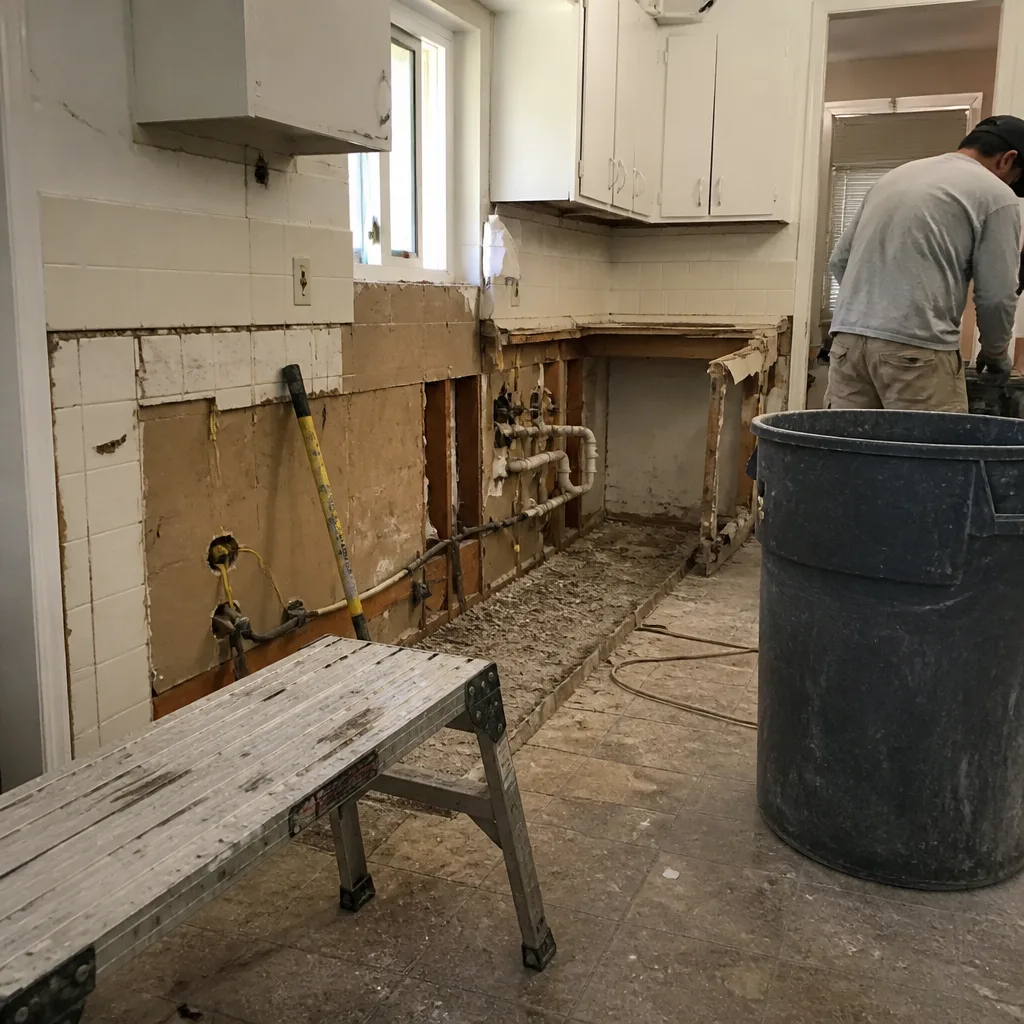 Before
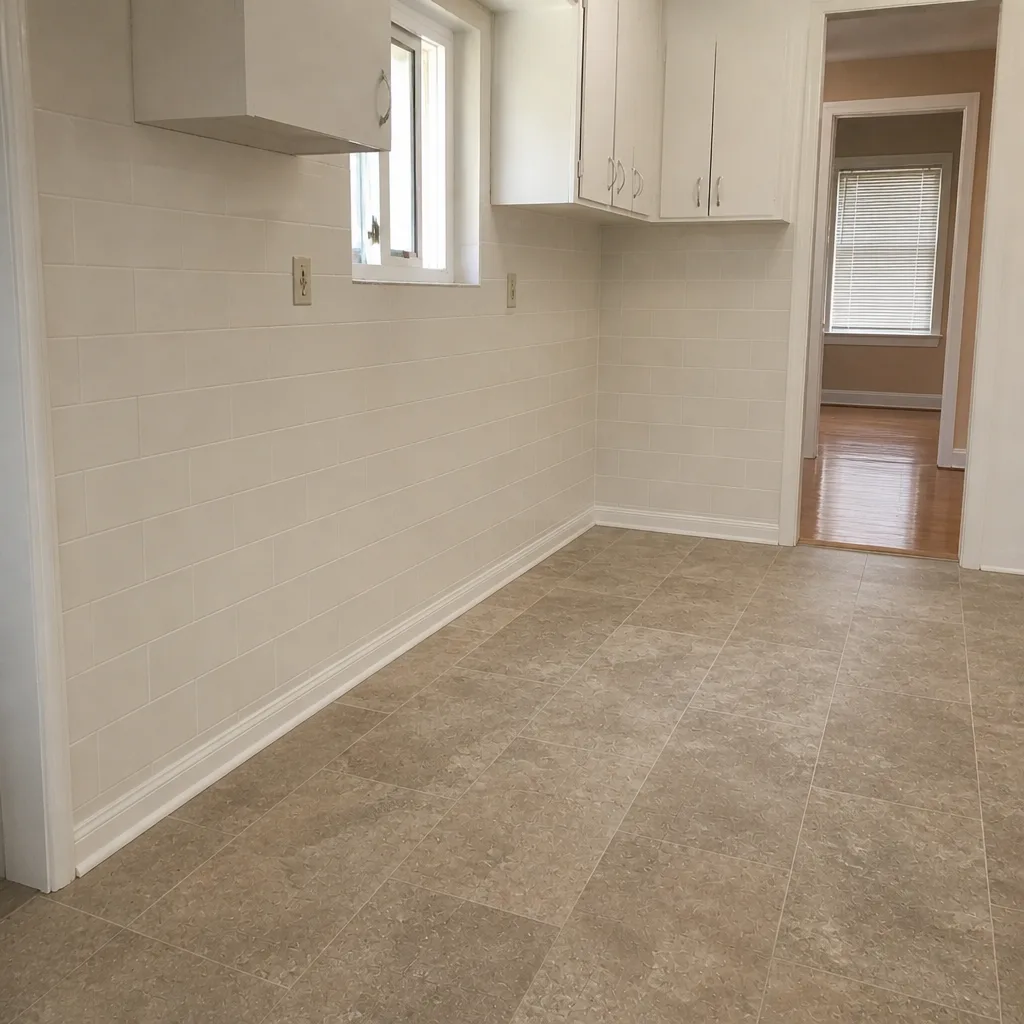 After
When to Call a Professional
Most of this guide is inspection and minor maintenance you can do yourself. A few things are worth handing off. If a cabinet door has warped beyond a hinge adjustment, if a countertop seam has opened wide enough to catch a fingernail, if your ventilation hood has lost meaningful airflow despite clean filters, or if you’ve found water damage in the cabinet base under a sink, call a professional rather than improvising. Countertop and cabinetry work involves heavy material and precise fitting, and getting it wrong costs more than getting it done right the first time. Kitchen Remodeling Henderson offers free estimates in Henderson – call (888) 397-6875. We answer 24/7. Fast dispatch from 7am to 7pm, Sunday through Friday. Every price is set per job by the written estimate, so you know the scope and the cost before any work begins.
Frequently Asked Questions
Wood cabinets expand and contract with indoor humidity, and Henderson’s swings between a dry summer and a humid monsoon week move cabinet doors enough to affect hinge alignment. The fix is usually a quarter-turn on the hinge screw. If a door has genuinely warped, that’s a warranty conversation with the cabinet manufacturer – which is one reason we install KraftMaid and Wellborn, both of which stand behind their products.
Every four to six weeks through the dusty months if you cook regularly, rather than the quarterly schedule in the manual. Henderson’s dust events load a hood filter faster than manufacturer schedules assume, and a loaded filter reduces airflow and lets grease build in the duct.
Open the cabinet doors below any sink on an exterior wall so room air reaches the supply lines, and let the faucet drip slightly overnight. Confirm you know where the kitchen shutoff valve is before the freeze arrives. These are simple steps that prevent the pipe failures that damage cabinet bases and countertops.
Yes, if you remove the old caulk completely first and work on a mild spring day when surfaces are clean, dry and moderately warm. Don’t re-caulk in extreme heat or cold, since the sealant won’t bond well. If you’re not comfortable working around a finished stone countertop, a professional can handle it quickly.
Descale faucet aerators and dishwasher spray arms monthly by soaking them in white vinegar. Henderson’s water carries dissolved minerals that build up on any wet surface, and monthly descaling keeps flow strong and fixtures working properly. Choose fixtures from brands like Kohler that can be serviced rather than replaced.
If seams keep opening after re-sealing, if the surface has chips or burns you can’t live with, or if you’re already replacing cabinets, that’s the right window to replace countertops at the same time. Pairing cabinet and countertop work in one scope is how a kitchen stays coordinated – and choosing from Cambria, Silestone or Caesarstone lets you match material, finish and thickness to the way your kitchen actually gets used.
The Bottom Line
Henderson kitchen care isn’t about four seasons – it’s about managing one long heat cycle and one short freeze risk, with a narrow spring window for the sealant work that holds everything together. Clean the coils, watch the hood filters, descale monthly, know your shutoff valve, and re-caulk in spring. Do those things and your cabinets, counters and fixtures will hold up for years instead of seasons. When something moves beyond routine upkeep, a single contractor who handles cabinets, countertops and fixtures as one scope keeps the whole kitchen accounted for. From cabinet box to faucet finish, one team is easier to hold accountable than three.
Ready to plan your next kitchen step? Call (888) 397-6875 for a free estimate. We answer 24/7. Fast dispatch from 7am to 7pm, Sunday through Friday. Our kitchen remodeling team handles design selection through installation, and every quote is written line-item so you know exactly what you’re getting before work starts.
Written by the team at Kitchen Remodeling Henderson.