
Last updated November 17, 2026
 Shaker
 Modern flat-panel
 Two-tone cabinets
 KraftMaid
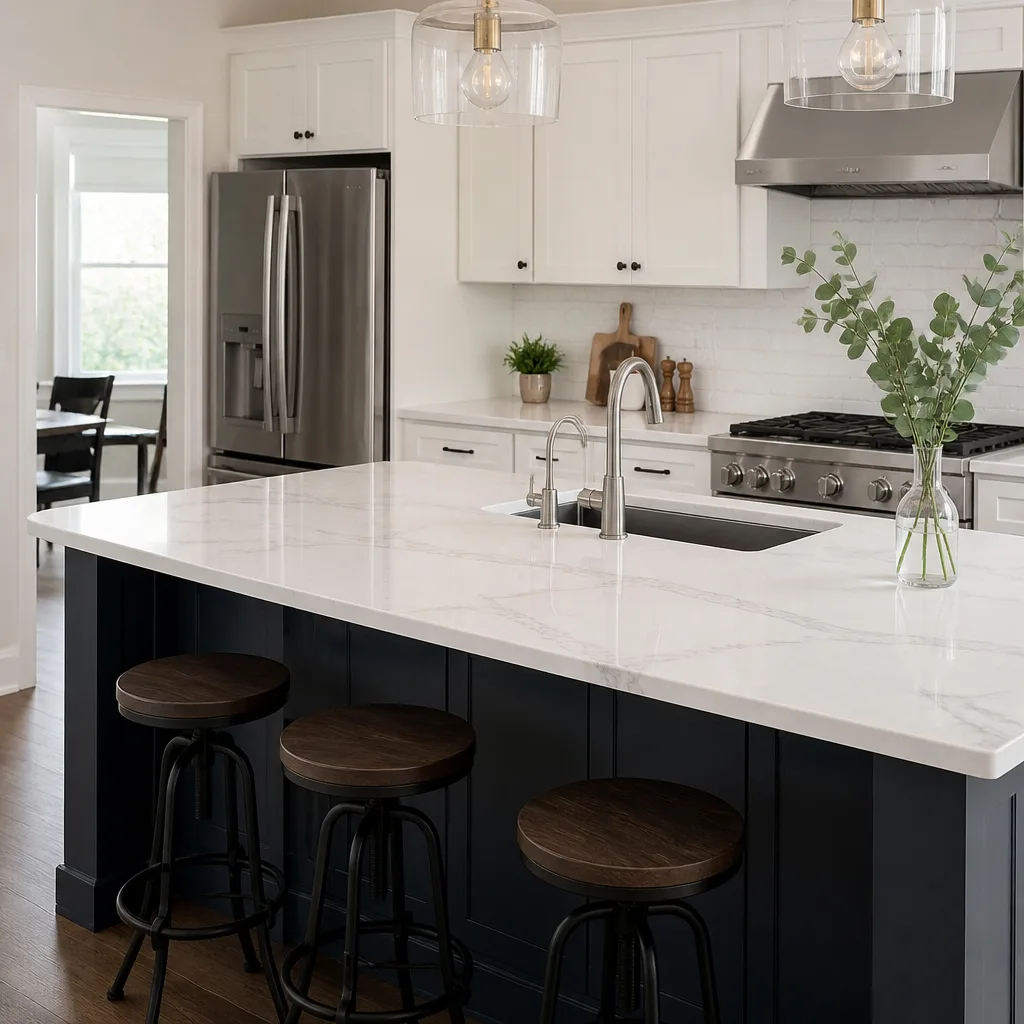 Cambria quartz
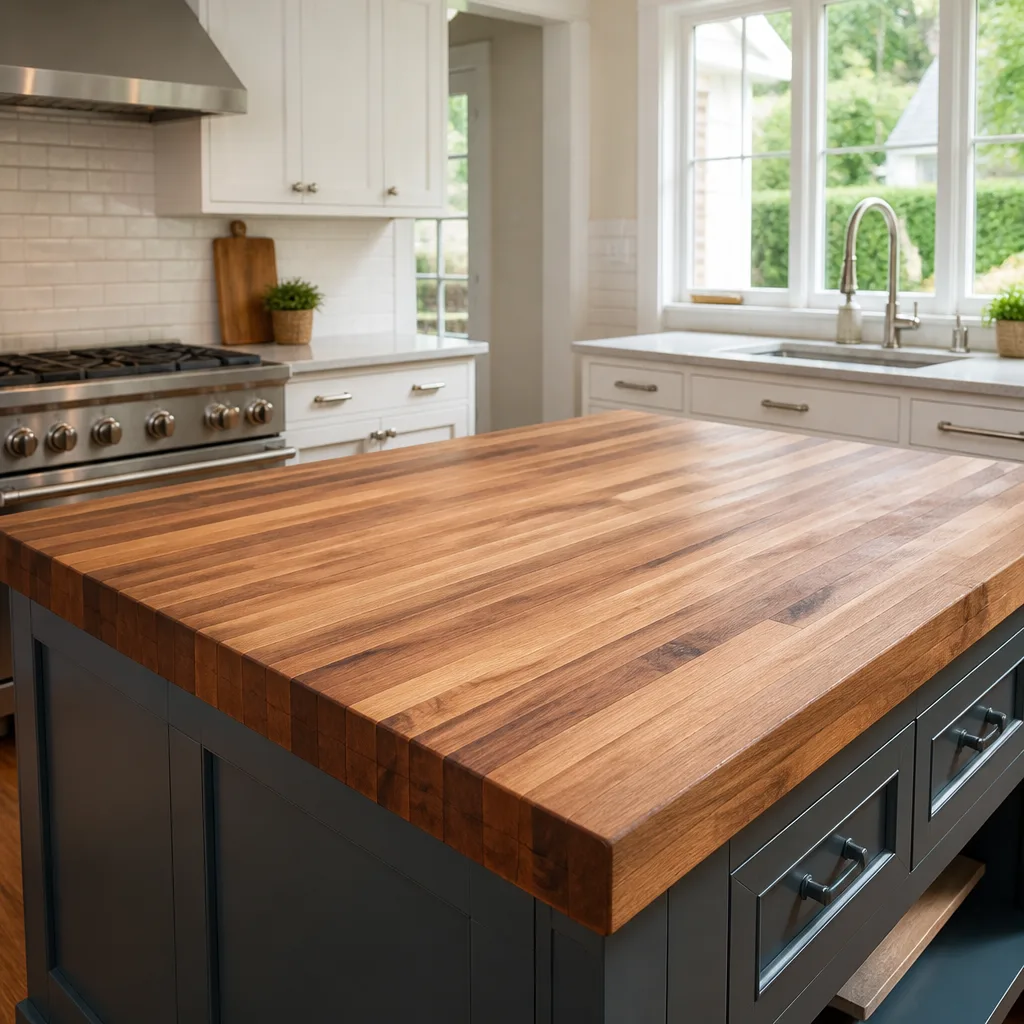 Butcher block
 Open shelving
Free design consultation - KraftMaid and Wellborn cabinet lines, Cambria and Silestone surfaces, and every tier from refacing to full custom laid out side by side
Kitchen Remodeling Warning Signs: A Henderson Homeowner’s Reference Guide
A KraftMaid cabinet door that starts binding every summer isn’t a defective cabinet. It’s a humidity acclimation issue, and the difference between catching it early and catching it late is the difference between a 15-minute hinge adjustment and a warped face frame that turns into a warranty dispute. The same principle runs through every surface in your kitchen. Countertops, fixtures, grout, wiring: each one sends quiet signals months before a real failure. This guide teaches you to read those signals by material type, in the specific conditions Henderson homes actually live in, so you’re making small fixes instead of facing replacements.
Quick Answer
The most common early warning signs of kitchen remodeling trouble in Henderson are cabinet doors that bind or rub seasonally, hairline cracks in the grout directly behind the range, faucet pressure that drops gradually, discoloration under the sink cabinet, and small chips along a quartz countertop edge near the cooktop. Each of these is a signal, not a failure. Read early enough, most point to minor adjustments or surface care; ignored for a year or two, several turn into component replacement.
Styles & brands we work with
- Shaker
- Modern flat-panel
- Two-tone cabinets
- KraftMaid
- Cambria quartz
- Butcher block
- Open shelving
Table of Contents
- Cabinet Warning Signs, Component by Component
- Countertop Warning Signs on Engineered Quartz
- Plumbing-Adjacent Warning Signs at the Sink and Faucet
- Tile and Grout Warning Signs Near Heat Sources
- Electrical Warning Signs in a Remodeled Kitchen
- How Henderson’s Seasons Show Up in Your Cabinets
- When a Warning Sign Is Actually Something Else
- What You Can Check and What Needs a Professional
Cabinet Warning Signs, Component by Component
Cabinets fail at the joints and hardware first, not in the box itself. A good cabinet line – KraftMaid and Wellborn both build to a manufacturer standard worth understanding – has a lifespan measured in decades when the components stay aligned. What unseats them is movement: seasonal humidity swings, a hinge that loosens a quarter turn, a drawer loaded past its rated capacity. In Henderson, the dry air most of the year and the occasional monsoon-season humidity spike are exactly the conditions that reveal a cabinet that was never properly acclimated before installation.
Here’s what each warning sign actually means:
- Face frame gaps. A visible line opening between the cabinet box and the face frame usually means the frame is drying out and pulling away from its fasteners. In a dry climate this is common on cabinets installed during a humid stretch and never re-checked.
- Drawer box sag. A drawer that drags at the back or drops when pulled out is either overloaded, running on a failing slide, or mounted to a cabinet that’s settled. Check the load rating of the slide before assuming the cabinet is bad.
- Door finish crazing near the dishwasher. Fine cracks in the finish, especially on the door closest to the dishwasher vent, come from repeated steam exposure. It’s a finish problem, not a structural one, and it’s the clearest signal your dishwasher is venting directly at the cabinetry.
- Bindings that come and go with the season. A door that rubs in July and clears by October is telling you the cabinet is moving with humidity. A hinge adjustment once, then monitoring, is usually all it needs.
- Doors that no longer sit flush. Two doors that meet at different depths usually point to a hinge that’s worked loose or a cabinet that’s no longer plumb. Both are checked the same way: level on the box, then alignment on the doors.
None of these is a reason to replace a cabinet. All of them are reasons to have someone look at the hardware and the mounting before the movement gets a chance to warp a panel. If you’re weighing a fix against a full cabinet installation, the component list above is the line to draw: hardware and alignment are maintenance, a warped or delaminated box is replacement.
Countertop Warning Signs on Engineered Quartz
Engineered quartz like Cambria, Silestone, and Caesarstone is dense, non-porous, and forgiving, but it has specific weak points worth knowing. The resin binder that makes quartz stain-resistant is also the part that reacts to heat and harsh chemistry. Most of what looks like countertop damage on a quartz surface is actually a care issue caught early, and most of what looks like a care issue caught late is a repair.
What to watch for:
- Micro-chipping along the edge near the cooktop. Small chips at the front edge closest to the range usually trace to impact – a pan edge, a heavy utensil – combined with thermal stress. The chip itself is cosmetic at first; if the edge is left unprotected, it can widen.
- Seam separation. A visible line opening at a seam between two slabs means the adhesive has failed or the cabinet below has shifted. Seam separation is a structural signal, not a cosmetic one, and it’s worth addressing quickly because a moving seam stresses the edges of both slabs.
- Discoloration that appears in a ring or a blotch. A dull patch with a defined edge is usually cleaning-product damage – an abrasive or an acid-based cleaner dulling the resin. Discoloration that follows the shape of the window light is a UV issue, and it points at direct sun exposure on a surface that was selected for a shaded spot.
- Dullness only where you prep. A matte zone in the middle of the island is normal wear on the finish, not damage. It’s the surface telling you it’s the work zone.
Quartz is a material choice as much as a color choice. When you choose your surface from three premium lines, you’re also choosing the thickness, edge profile, and finish that determine how the counter behaves in a busy kitchen. Comparing Cambria, Silestone, and Caesarstone side by side is part of choosing correctly, and it’s one reason we install all three rather than pushing a single brand. If you want the broader picture on surfaces, kitchen remodeling walks through how countertops fit the full project scope.
Plumbing-Adjacent Warning Signs at the Sink and Faucet
A faucet that loses pressure slowly is not a faucet problem most of the time. A Kohler or Moen kitchen faucet is built to last, and when the flow drops, the cause is usually upstream: scale in the supply line, a clogged aerator, or a cartridge that’s picked up sediment. Henderson’s water is hard enough that scale buildup in supply lines and aerators is a real, recurring issue. Reading the pressure drop early saves you from replacing a faucet that only needed its aerator cleaned.
The signals worth watching:
- Gradual pressure drop at one fixture only. If the kitchen faucet slows while bathroom fixtures are fine, the issue is local to the kitchen line – aerator, cartridge, or the supply line under the cabinet. Hard water scale is the usual suspect here.
- Pressure drop at every fixture in the house. That’s a whole-house signal and points to the main line or pressure regulator. Call a plumber, not a kitchen contractor.
- A slow drain at a Blanco sink. A Blanco fireclay or composite sink drains well when the trap and the basket strainer are clean. A slow drain that returns after snaking usually means grease has coated the tailpiece, or the vent is restricted.
- Discoloration under the sink cabinet. Staining, soft wood, or a musty smell in the cabinet under the sink is the single most overlooked warning sign in a kitchen. A slow P-trap leak can run for months on a cabinet floor before it shows on the surface, and by the time it does, the cabinet bottom is often compromised.
Fixture-to-finish coordination matters here. When the same team that installs the cabinets and countertops also specs and installs the Kohler, Moen, and Blanco fixtures, the supply lines and the trap are checked as part of the same job. That closes the gap where most kitchen projects develop problems: the fixture installer blames the cabinet, the cabinet installer blames the plumber, and the homeowner is left holding the bill.
Tile and Grout Warning Signs Near Heat Sources
A hairline crack in the grout directly behind the range is one of the most misread signals in a kitchen. It looks like a grout failure, so homeowners call a tile setter who regrouts the joint. Six months later, the crack is back. The real cause in most cases is thermal expansion: the backsplash behind a range heats and cools every time the burners run, and grout – rigid by nature – has no give. The crack is the material doing what it’s designed to do when the wrong grout was used or the joint wasn’t given room to move.
What tells you it’s thermal rather than a grout failure:
- The crack follows the range’s footprint. If the crack runs horizontally along the tile line behind the cooktop and stops where the range ends, that’s thermal expansion.
- The crack reopens after regrouting. A true grout failure usually appears in a shower or a wet zone. A crack that returns after a regrout behind a range was never a grout problem.
- No crack anywhere else in the backsplash. Thermal cracks are localized to the hot zone. Cracks spread across the whole run of backsplash point to substrate movement instead.
The fix for a thermal crack is different from a standard regrout: the joint behind the range needs a flexible sealant instead of rigid grout, so it can move with the heat. That’s a small, targeted repair if you catch it early. If you let it run for a couple of seasons, the tile adhesive behind the crack can loosen, and then the fix becomes resetting tile instead of sealing a joint. This is a detail we handle as part of a full Kitchen Remodeling Henderson scope, because the substrate, the tile, and the cabinet line all have to agree.
Electrical Warning Signs in a Remodeled Kitchen
Electrical warning signs in a kitchen carry more weight than any other signal in this guide, because they cross from “fix soon” into “call now.” A kitchen that’s been remodeled has dedicated circuits for the range, dishwasher, microwave, and the counter outlets. When one of those circuits starts behaving oddly, it’s telling you something about the load or the wiring, and it deserves a licensed electrician’s eyes before it gets pushed further.
The signals that matter:
- A dedicated circuit tripping under normal load. If the dishwasher circuit trips while the dishwasher runs and nothing else is on it, the circuit is either undersized, the breaker is failing, or there’s a fault in the wiring. Do not reset it and keep going. Call an electrician.
- Flickering over-cabinet LED strips. LEDs are sensitive to voltage drop and to loose connections. Flickering strips usually mean a loose driver connection or a dimmer that’s incompatible with the LED load. It’s rarely dangerous on its own, but it’s a sign the circuit deserves a check.
- Outlet face discoloration near the dishwasher. Brown or scorched marks around an outlet face are heat damage. That’s a call-now signal, not a maintenance item. Stop using the outlet and get an electrician out.
- Outlets that feel warm to the touch. Warmth means current is flowing where it shouldn’t. Any outlet that’s warm with nothing plugged in needs an electrician.
One note on code: kitchen electrical requirements in Henderson follow the Nevada residential code and the NEC, but the specifics – GFCI protection zones, dedicated circuit requirements, outlet spacing – should be confirmed with the city’s building department for your project. We don’t state code sections without verifying them, and neither should anyone quoting you a job. If your remodel involves electrical changes, the permit and inspection part matters more than the fixture list.
How Henderson’s Seasons Show Up in Your Cabinets
Cabinets in Henderson live through a wider humidity swing than most homeowners expect. The desert air is dry through most of the year, then the monsoon season pushes humidity up fast. Wood is hygroscopic, meaning it takes on and gives off moisture with the air, and every cabinet door, drawer front, and face frame moves slightly with it. In a climate with a steady humidity level, that movement is small enough to ignore. In Henderson, it shows up as a seasonal pattern you can actually learn to read.
Here’s the pattern most people miss:
- Late spring into early summer: doors may bind slightly as the wood takes on moisture. If they clear by mid-summer, the cabinet is adjusting normally.
- Peak dry season: doors that were tight in the humid stretch can develop a slight gap. A gap that closes on its own is normal movement.
- Doors that bind year-round: that’s no longer humidity. That’s a hinge, a mounting screw, or a cabinet that’s out of level, and it’s worth a technician’s look.
- Face frames that show a gap in one season and not the other: usually a fastener that’s loosened rather than a frame that’s failing. A careful tightening is often enough.
Our technicians have up to 14 years of experience reading exactly this pattern, and the practical takeaway is simple: a cabinet door that’s slightly out of alignment is a maintenance item, not a defect, and treating it as one keeps the manufacturer warranty intact. KraftMaid and Wellborn both back their cabinetry with manufacturer-limited lifetime warranties, and a warranty claim is much easier when the owner can show the cabinet was adjusted rather than ignored.
When a Warning Sign Is Actually Something Else
Some warning signs look like one thing and are actually another. Reading them wrong costs money and time, and it’s how homeowners end up replacing a component that was never the problem. Here are the most common misreads we run into in Henderson kitchens:
- A “cabinet” problem that’s a floor problem. A cabinet run that’s out of level at the toe kick is often a floor issue, not a cabinet issue. Shim the cabinet to compensate, and the doors align without touching the hinges.
- A “countertop” problem that’s a cabinet problem. A seam that opens, or a countertop that rocks slightly, is usually telling you the cabinet below has settled. Fix the cabinet, and the counter sits flat again.
- A “faucet” problem that’s a supply problem. Replacing a Kohler faucet because the flow dropped is throwing money at the wrong end of the line. Check the aerator and the supply line first.
- A “grout” problem that’s thermal. As covered above, a crack behind the range is a heat issue. Regrouting without a flexible joint is a repeat repair.
- A “leak” that’s condensation. Moisture under the sink isn’t always a leak. A cold supply line in a humid stretch can sweat. Check the pipe with a paper towel: a leak leaves a wet spot on the pipe, condensation leaves the pipe dry and the cabinet floor wet.
One more: a chip in a quartz countertop near the sink is often blamed on the cleaner, but on Cambria and Caesarstone surfaces the more common cause is a heavy pot or a dropped utensil. The fix for a chip is the same whether the cause was cleaner or impact – a professional edge repair – but reading the cause correctly matters for how you treat the rest of the surface afterward.
What You Can Check and What Needs a Professional
Some warning signs are safe to inspect yourself, some are not, and a few are genuinely dangerous to touch. It’s worth being clear about which is which, especially because this is a permanent guide you may return to.
What’s safe to check yourself:
- Opening and closing every cabinet door and drawer to feel for binding or sag.
- Shining a flashlight under the sink cabinet and looking for staining or soft wood.
- Checking faucet aerators and the supply line for visible scale.
- Looking at the grout line behind the range for cracks and their pattern.
- NOT resetting a tripping breaker repeatedly. Reset once. If it trips again, call an electrician.
- NOT opening an outlet face or a breaker panel. Those are licensed-electrician tasks, and the risk is severe.
What needs a professional:
- Anything involving the electrical panel, wiring, or an outlet that’s discolored or warm.
- Any suspected gas line issue – call the utility and a licensed plumber, not a kitchen contractor.
- Face frame separation, drawer box failure, or a cabinet box that’s no longer plumb.
- Quartz seam separation or edge chipping that’s more than cosmetic.
- Any slow leak under the sink that’s stained the cabinet floor.
This is where Henderson homeowners get the most value from a kitchen-only contractor. We install KraftMaid and Wellborn cabinets, Cambria, Silestone and Caesarstone surfaces, and Kohler, Moen and Blanco fixtures, and because the same team handles cabinets, countertops and fixtures, a warning sign that crosses those scopes gets a single answer instead of a blame loop. Our technicians have up to 14 years of experience, and every job is quoted in writing with a fixed price and no change orders.
Common Mistakes to Avoid
- Treating a seasonal hinge binding as a defect. A door that binds in the humid stretch and clears in the dry stretch is doing what wood does in Henderson’s climate. Have the hinge adjusted rather than filing a warranty claim on a cabinet that isn’t failing.
- Regrouting a thermal crack behind the range without a flexible joint. Rigid grout in a joint that sees heat every day will crack again. The right fix is a sealant joint, not a repeat regrout.
- Replacing a faucet before checking the aerator and supply line. In Henderson’s hard water, scale buildup is the most common cause of a pressure drop. Cleaning the aerator often restores flow without a new fixture.
- Ignoring discoloration under the sink. A slow P-trap leak that runs for months can compromise the cabinet bottom. Check under the sink with a flashlight at least once a season, and fix small leaks early.
- Resetting a tripping breaker and moving on. A dedicated circuit that trips under normal load is telling you there’s a problem, not that the breaker is stubborn. Call an electrician and don’t reset more than once.
- Assuming a countertop seam failure is a countertop problem. Most seam separation traces to a cabinet below that’s settled. Check the cabinet before ordering a repair on the surface.
- Buying a cleaning product because it says “quartz safe”. Some quartz-safe labels still use abrasives or acids that dull the resin. Use a pH-neutral cleaner, and read the label on anything that claims to be safe for engineered stone.
See the difference
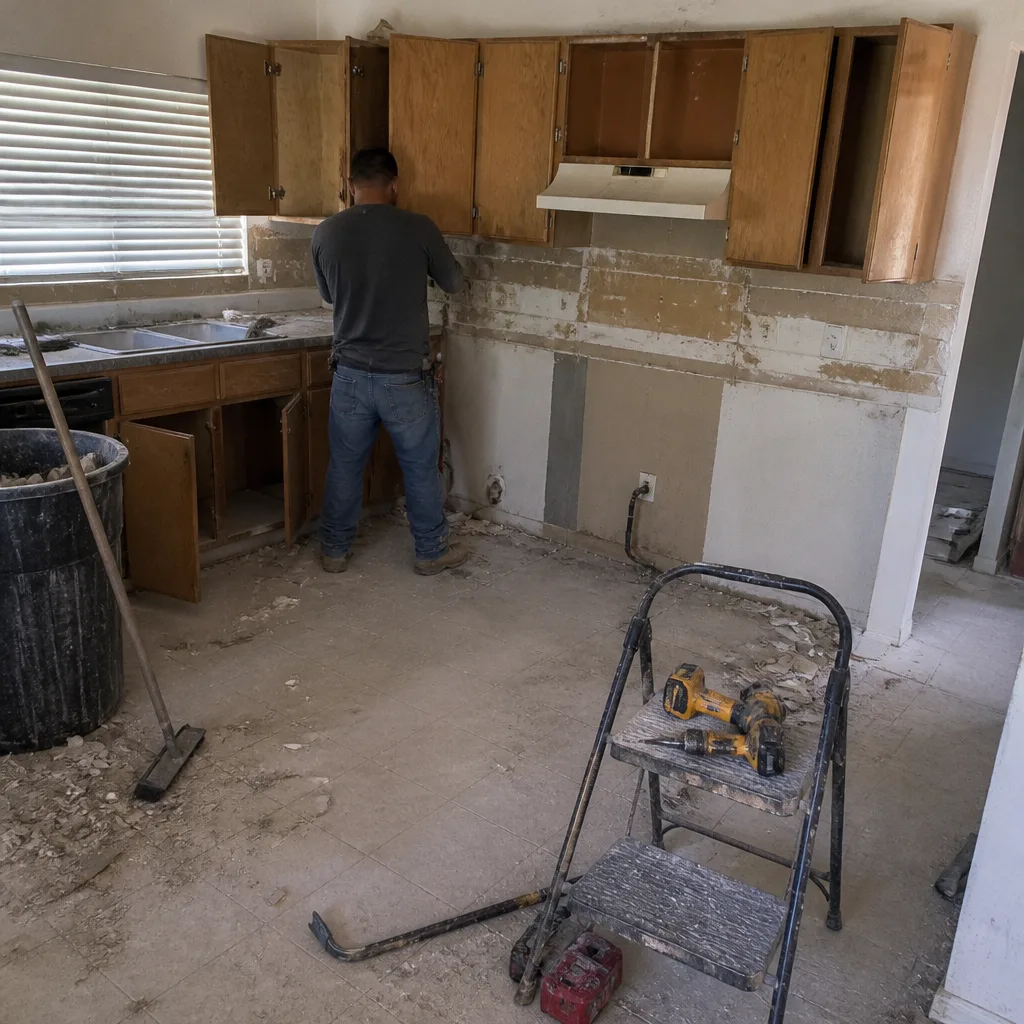 Before
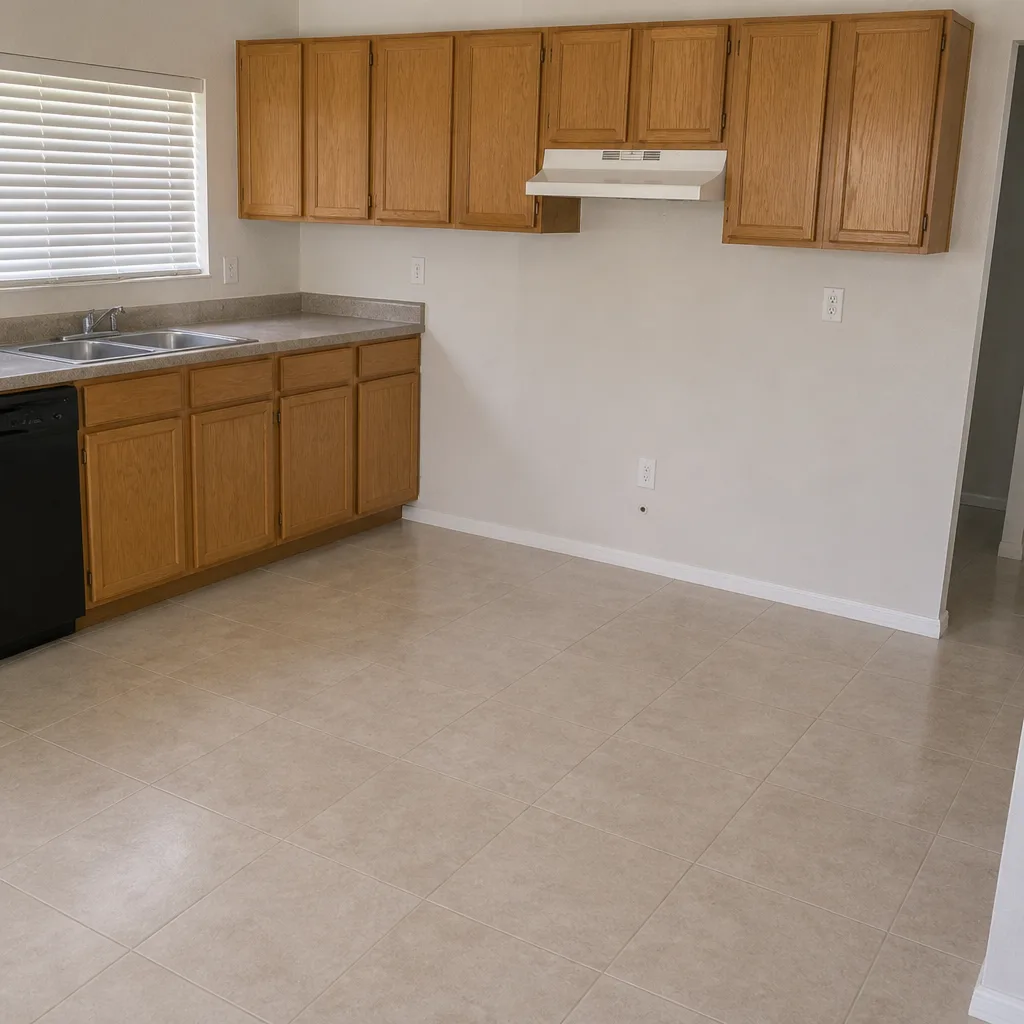 After
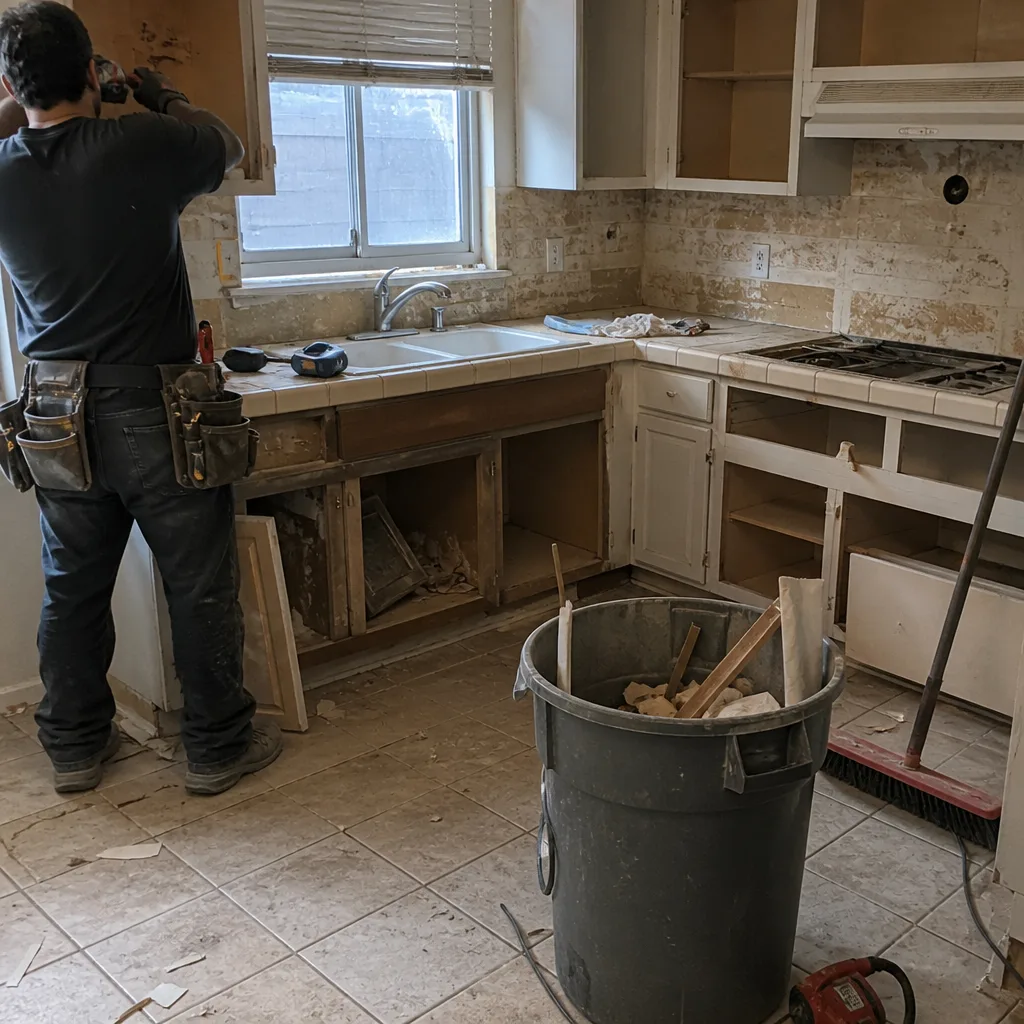 Before
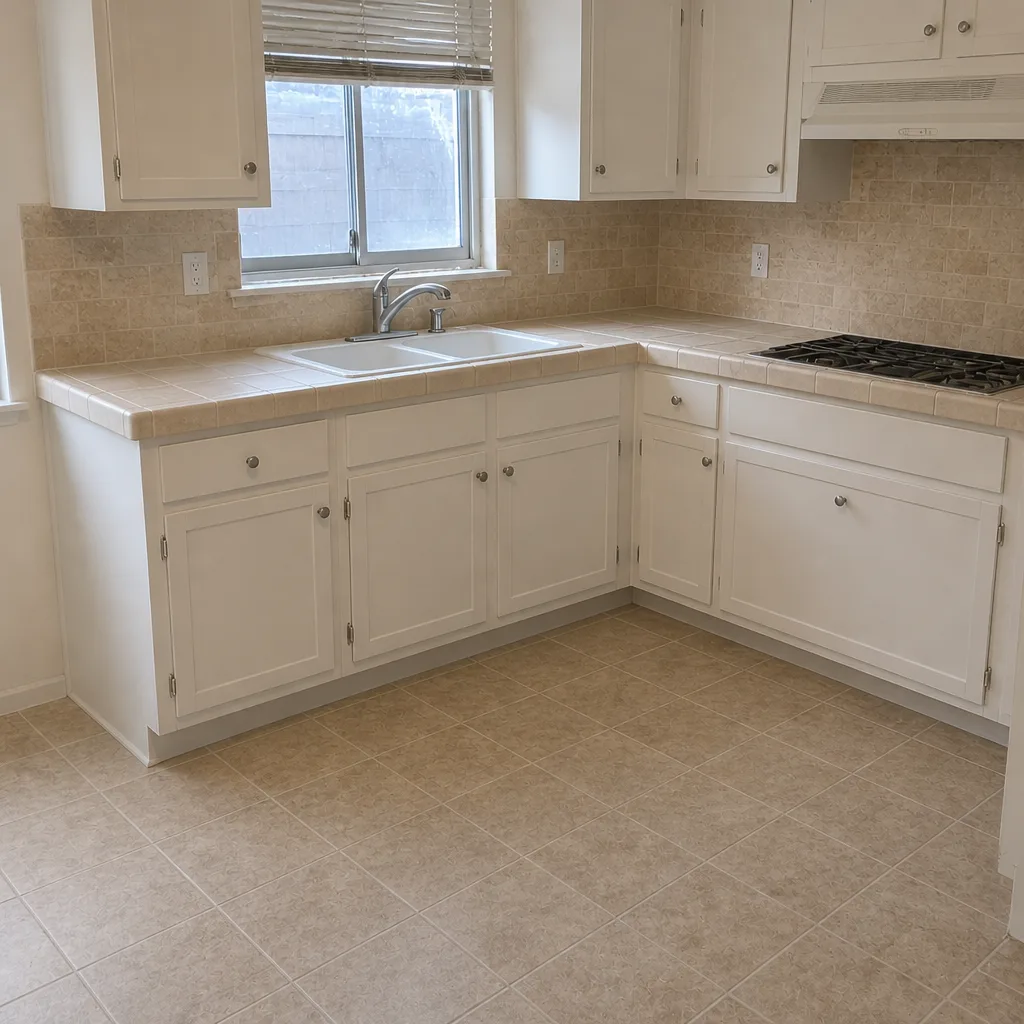 After
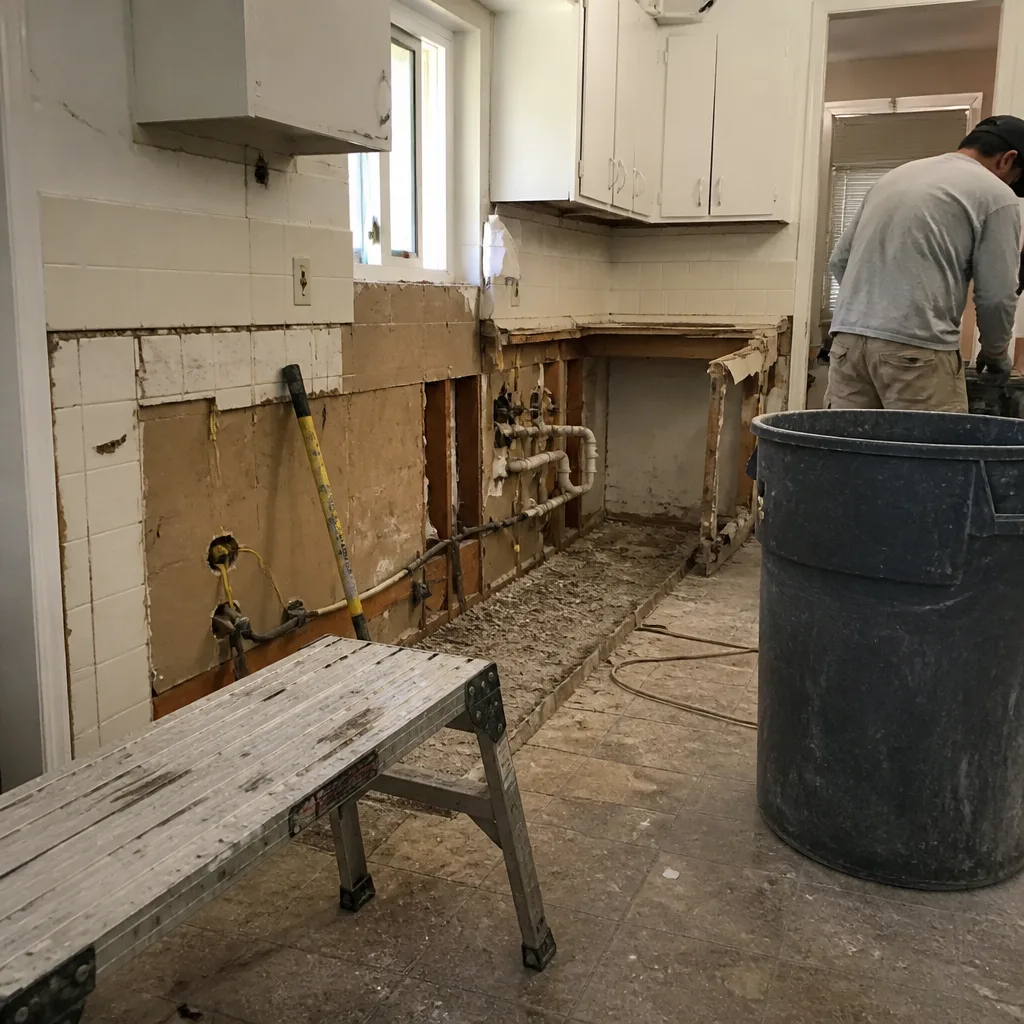 Before
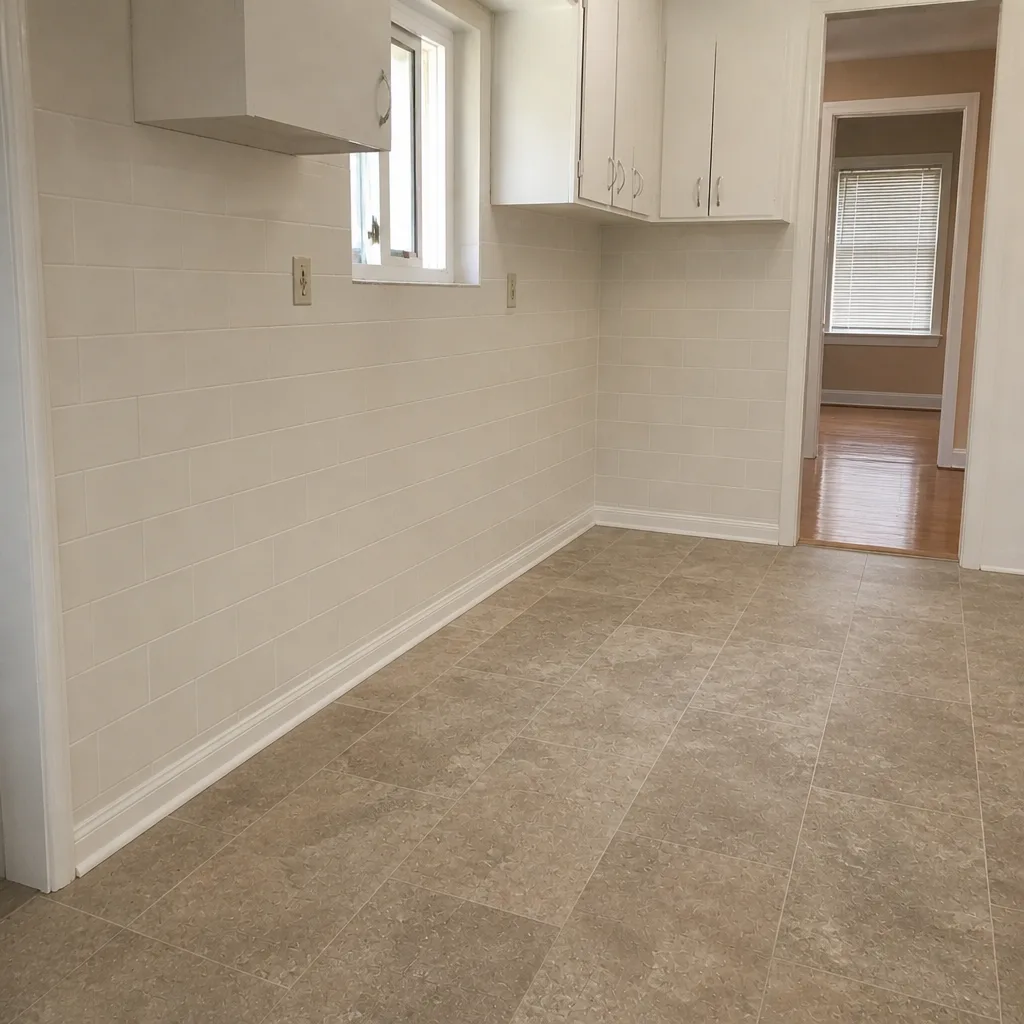 After
When to Call a Professional
Call a professional when you see a signal that crosses a line: face frame separation, drawer box failure, a quartz seam that’s opened, any discolored or warm outlet, a slow leak under the sink that’s stained the cabinet floor, or a grout crack behind the range that’s come back after a repair. Also call when a warning sign is one you can’t positively identify. A professional look is far cheaper than a wrong repair, and the well-known failures in kitchens are the ones that started as a small signal nobody read.
Kitchen Remodeling Henderson offers free estimates in Henderson. Call (888) 397-6875 to schedule your free estimate. We answer 24/7. Fast dispatch from 7am to 7pm, Sunday through Friday. The written estimate sets the price, and every job is fixed-price with no change orders.
Frequently Asked Questions
A hinge problem is a door that’s misaligned but flat, and a warped door has a visible curve or twist when you sight down its edge. Check the door against a straightedge first: if the door is flat, it’s a hinge adjustment; if it’s curved, the door or the box is the issue. Call (888) 397-6875 for a free estimate if you’re not sure which you’re looking at.
Micro-chipping near the cooktop on Cambria, Silestone, or Caesarstone usually comes from impact combined with heat stress at the edge nearest the range. It’s a cosmetic repair at first, and a professional edge repair handles it. Call (888) 397-6875 for a free estimate before the chip widens.
It’s usually not the grout – it’s thermal expansion in a joint that was given no room to move. The fix is a flexible sealant joint rather than a regrout, and it’s a small repair if caught early. Call (888) 397-6875 to schedule a free estimate.
Usually not. In Henderson, a gradual pressure drop at one fixture is most often scale in the aerator or supply line, not a failing Kohler or Moen faucet. Check the aerator first, and call (888) 397-6875 if the drop continues after cleaning.
It can be a slow P-trap leak, or it can be condensation on a cold supply line during a humid stretch. Wipe the pipe with a paper towel: a wet spot on the pipe points to a leak, a dry pipe with a wet cabinet floor points to condensation. A leak needs a plumber; call (888) 397-6875 for a free estimate if the cabinet floor is stained or soft.
No. Seasonal binding in Henderson’s climate is a humidity acclimation issue, and a hinge adjustment usually resolves it. Replacement is for a warped or delaminated box, not for doors that move with the seasons. Call (888) 397-6875 for a free estimate if the binding is year-round.
The Bottom Line
Most kitchen remodeling problems in Henderson are readable months before they become expensive. A cabinet door that binds seasonally is a hinge adjustment, not a defect. A grout crack behind the range is thermal, not a grout failure. A faucet pressure drop points at the aerator before the fixture, and a stain under the sink points at the trap before the cabinet. The gap between a small fix and a full replacement is almost always time, so read the signals early and act on the small ones. When a signal crosses the line into a structural, electrical, or leak problem, call a professional who can see the whole kitchen at once. Kitchen Remodeling Henderson offers free estimates in Henderson – call (888) 397-6875 to schedule yours. We answer 24/7.
Written by the team at Kitchen Remodeling Henderson.