
Last updated November 17, 2026
 Shaker
 Modern flat-panel
 Two-tone cabinets
 KraftMaid
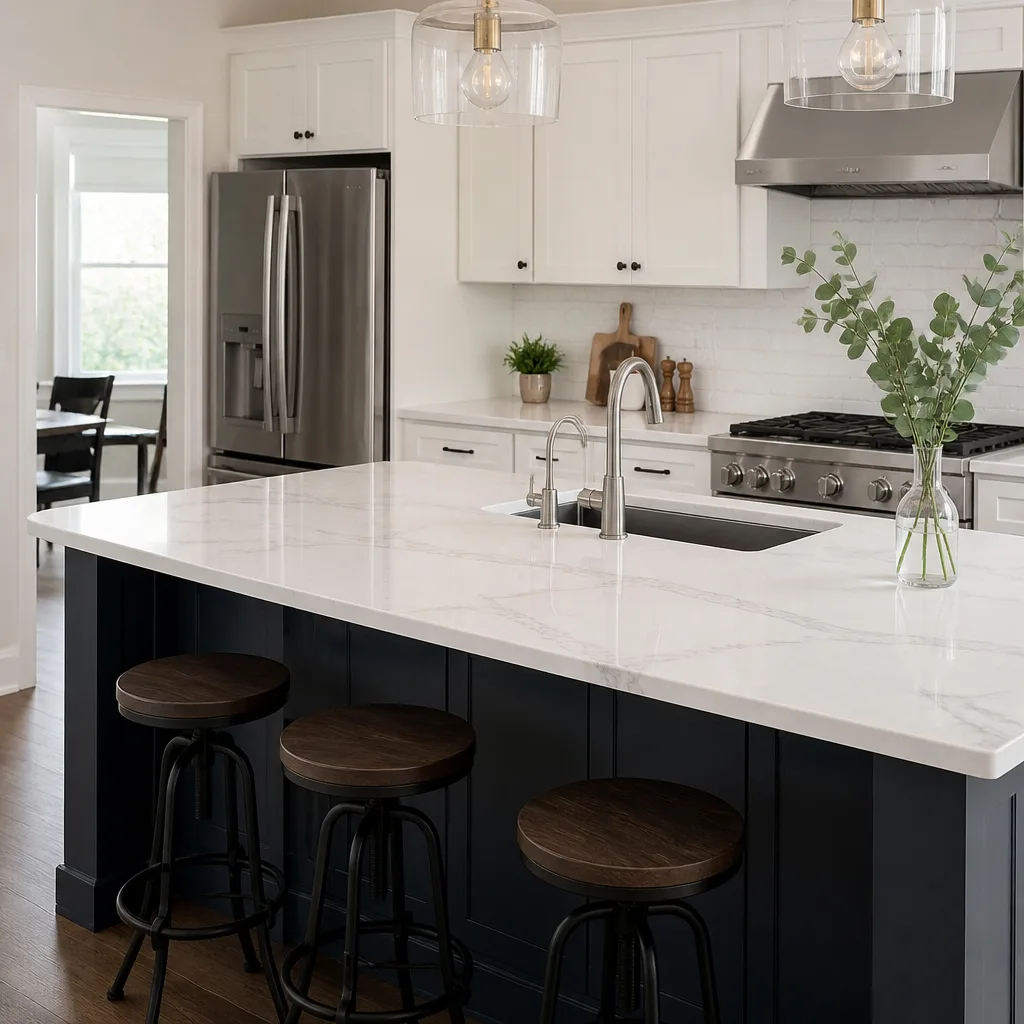 Cambria quartz
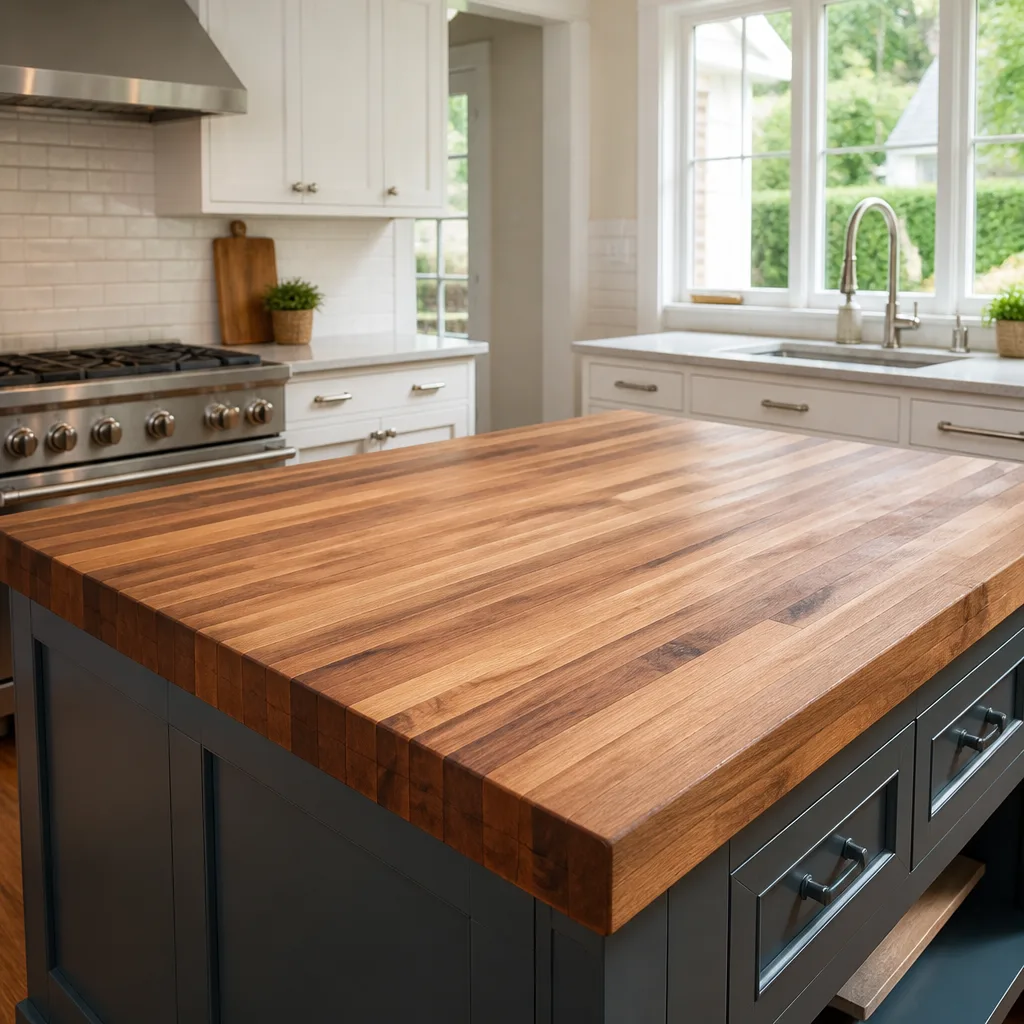 Butcher block
 Open shelving
Free design consultation - KraftMaid and Wellborn cabinet lines, Cambria and Silestone surfaces, and every tier from refacing to full custom laid out side by side
Most homeowners hiring a kitchen remodeling contractor in Henderson start with the wrong question. They ask “who’s licensed?” when the real question is “who is going to specify, order, and install every single component of my kitchen with their own name on the line?” Nevada’s contractor board has no shortage of licensed contractors who can legally pull a kitchen permit and still never specify a full cabinet line in their life. Someone who’s bid dozens of bathrooms and additions can absolutely hand you a kitchen number – it just might not be one they’ve actually built from cabinet box to faucet finish.
What follows is the vetting framework we’d want if we were hiring for our own kitchens: the license classes that matter, the exact questions that separate a kitchen specialist from a general contractor farming out trades, the contract clauses that protect you from substitution games, and the reference-check questions most homeowners never think to ask.
Quick Answer
Hiring a kitchen remodeling contractor in Henderson requires more than confirming an NSCB license. You need to verify the license classification permits the work being self-performed, demand written material specificity in every bid line, and ask whose name pulls the plumbing and electrical permits. A bid that names no brand, cabinet line, or slab thickness is a bid that will change.
Table of Contents
- Step 1: Verify the Contractor’s Nevada License Classification
- Step 2: Read the Bid for Material Specificity
- Step 3: Trace the Subcontractor Accountability
- Step 4: Ask Reference Questions That Reveal Patterns
- Step 5: Require These Contract Clauses
- Why Kitchen-Only Specialists Beat General Contractors
- Common Mistakes to Avoid
- When to Call a Professional
Step 1: Verify the Contractor’s Nevada License Classification
Nevada licenses contractors through the Nevada State Contractors Board, and the classification on that license tells you what work the holder can actually self-perform. It’s not a formality. The classification is a legal boundary around what the contractor can do with their own hands and what they’re obligated to subcontract.
The two classifications you’ll encounter on a kitchen project in Henderson:
- Class B-2 (Residential General Contractor) – permitted to build or remodel residential structures within the scope defined by the board. A B-2 holder can contract for the full kitchen scope, but that does not mean they self-perform cabinetry, countertop fabrication, or plumbing rough-in. Most will subcontract these.
- Class C-3 (Carpentry and Cabinetry) – a specialty classification covering carpentry and cabinet installation. A C-3 holder can perform cabinet work but cannot contract for the full kitchen scope alone; they typically work under a B-2 or as a specialty subcontractor.
Why this matters: a B-2 license does not certify cabinet craftsmanship, countertop templating, or fixture specification. It certifies the holder is qualified to manage a residential remodeling contract. Those are different things. When you interview a contractor in Henderson, ask which classification they hold and which portions of your kitchen they will self-perform versus subcontract. The answer tells you how many layers exist between you and the person setting your cabinets.
You can verify any contractor’s license classification and standing directly with the Nevada State Contractors Board before signing anything. Do it. The board exists for exactly this purpose, and a contractor who resists is telling you something.
Step 2: Read the Bid for Material Specificity
A bid that lists “quartz countertop” as a line item is not a price. It’s a placeholder. That single phrase covers a $45/square-foot entry-level material and a $110/square-foot premium slab, and the install cost varies with slab thickness, edge profile, and templating complexity. A contractor who won’t name the material is leaving room for substitution and a change order.
The good news: this is one of the easiest things to check in a bid. Compare what a vague bid looks like against what a specific one looks like.
| Vague line item | Specific line item | Why it matters |
|---|---|---|
| Quartz countertop | Cambria Brittanicca, 3cm, eased edge, templated and installed | Material, finish, thickness, and edge profile are all priced in |
| New cabinets | KraftMaid [door style], full-overlay, soft-close hinges, drawn from spec sheet | You know the brand, door, and hardware |
| New faucet | Moen [model], brushed nickel, single-handle pull-down | No surprise swap at install |
| New sink | Blanco undermount, single bowl, [model] | You’ve agreed on the brand, not just “a sink” |
Every line in the bid should name three things: the brand, the model or series, and the finish or specification. A kitchen remodel is assembled from dozens of these decisions, and each one is a place where a vague bid can quietly become a more expensive one.
If a bid includes a premium surface, expect to see the brand named – Cambria, Silestone, or Caesarstone are the three quartz lines we work with because they have published quality standards and their own warranties. If those names don’t appear, ask why. A contractor who names the material is giving you a price you can hold them to.
Step 3: Trace the Subcontractor Accountability
Here is the question that separates disciplined kitchen contractors from everyone else: who pulls the plumbing and electrical permits, and whose name goes on them?
In Henderson, plumbing and electrical work on a kitchen remodel typically requires separate permits under the appropriate trade license. There are three possible answers when you ask, and they tell you almost everything you need to know:
- “We pull the permits ourselves under our general contractor license, and our licensed plumbing and electrical subs are listed on the job.” This is the clean answer. The general contractor is accountable for the trade work, and the subs are named on the permit record.
- “Our plumbing and electrical subcontractors pull their own permits.” Workable, but it means multiple accountable parties. You should know who each one is, get copies of their licenses, and understand the sequence – if a countertop templating delay runs past the plumbing rough-in window, whose problem is it?
- “We don’t pull permits for that – it’s a replacement.” Red flag on a full kitchen remodel. Plumbing and electrical modifications almost always require permits. Replacement of existing fixtures without moving supply or drain lines may not, but that boundary needs to be stated in writing before work begins.
Get all three answers in writing before the contract is signed. If a plumbing rough-in fails inspection because the sub didn’t follow code, your protection depends entirely on whose name is on the permit. In our experience, the coordination failures in kitchen projects cluster around exactly this handoff – the plumber, the electrician, and the countertop fabricator all need to be sequenced correctly, and when no single party is accountable, delays and rework follow.
This is why we treat kitchen remodeling as a single-contractor service with cabinet, surface, and fixture installs under one roof. It’s not that subcontractors can’t do excellent work. It’s that the gap between one trade finishing and another starting is where kitchens go wrong.
Step 4: Ask Reference Questions That Reveal Patterns
“Were you happy with the work?” gets you a yes from almost everyone. It’s a politeness question, not an information question. The useful reference check digs into the specific friction points of a kitchen remodel: money, materials, and time.
Ask former clients these five questions:
- “Did your final invoice match the original bid number?” Listen for “close” or “a bit more than we thought.” If it moved, ask what changed and how much notice they got.
- “How many change orders did you sign, and what triggered them?” One or two change orders on a kitchen remodel is normal; the number matters less than the reason. “We changed our mind about the countertop” is fine. “The contractor’s supplier didn’t have our cabinet in stock” is not.
- “Were the materials you received the exact brands and models you specified?” Substitution without approval is the single most common problem in kitchen projects. Ask specifically whether the countertop slab and cabinet door matched the bid.
- “Did every inspection pass the first time?” Failed inspections mean rework and schedule slips. How the contractor handled the correction matters as much as the failure rate.
- “If there was a coordination problem between two subs, how did the contractor resolve it?” The answer tells you how your project will be managed when things don’t go perfectly.
Ask for references from projects similar in scope to yours – full kitchen remodels, not bathroom conversions or single-fixture upgrades. A contractor who can’t produce three recent references from comparable kitchens is either new to kitchens or avoiding the question. Either way, you’ve learned something.
Step 5: Require These Contract Clauses
Nevada’s construction industry is regulated, but the details of your contract are negotiated between you and the contractor. These clauses protect you from the most common kitchen remodel problems. Ask for them by name and get them in writing.
Material Substitution Approval Rights
Include a clause that no material may be substituted for the one specified in the bid without your written approval. It must state that any substitution requires your signature before ordering or installation. This one clause kills the switcheroo. If the contractor’s distributor can’t get the Cambria slab you agreed on, you get a phone call and a choice – not a different brand installed while you’re at work.
Inspection Milestone Payment Schedule
Payments should tie to milestones, not to calendar dates. A well-structured schedule looks like:
- A deposit at contract signing (Nevada sets a statutory cap on deposits – confirm the current limit with the Nevada State Contractors Board before signing)
- A payment after rough-in and rough-in inspection passes
- A payment after cabinet installation
- A payment after countertop template and installation
- Final payment after all inspections and your walk-through
Never pay for work before it’s done. A front-loaded schedule asks you to fund the remainder of the project with no leverage.
Lien Waivers from Subcontractors
Any subcontractor who works on your kitchen can file a mechanic’s lien against your property if the general contractor doesn’t pay them. Protect yourself: require conditional lien waivers from every sub at each payment, and unconditional waivers after payment clears. At final payment, require a final lien waiver from the general contractor and every sub on the job. No waiver, no payment. That’s the rule that keeps a paying homeowner out of someone else’s dispute.
Why Kitchen-Only Specialists Beat General Contractors
A general contractor can do a kitchen remodel. A kitchen specialist does nothing else. That difference shows up in things that don’t appear on a bid but absolutely affect your outcome.
A specialist knows which cabinet lines fit which space and budget without calling three distributors. We install KraftMaid and Wellborn cabinetry because those two lines cover the range from a straightforward shaker kitchen to a complex custom layout, both carry manufacturer-backed limited lifetime warranties, and both have door styles and finish options that hold up well in a Henderson kitchen where the sun can be unforgiving on painted finishes over time. That’s an acquired judgment, not a brochure line.
A specialist also carries a curated surface selection. We work with three premium quartz lines – Cambria, Silestone, and Caesarstone – so a homeowner can compare material, finish, and thickness across those three without driving between showrooms. Each brand has its own pricing, its own finishes, and its own warranty terms. A specialist can tell you which one fits your countertop footprint and grade, and a generalist can’t without calling a fabricator.
And a specialist coordinates fixtures as part of the same scope. Kohler, Moen, and Blanco sinks and faucets get specified together with the cabinet and countertop because they have to be. A faucet that doesn’t clear the backsplash height, a sink that doesn’t drop into a cabinet base the way the cabinet line expects, a disposal flange that doesn’t fit the sink bowl – these are coordination problems. When one contractor handles cabinets, countertops, and fixtures, those problems get caught on paper, not in your kitchen. If you want a deeper look at how a single-contractor kitchen is assembled, our guide to cabinet installation covers the sequence from measurement through final hardware.
Common Mistakes to Avoid
- Hiring on lowest bid without reading material specificity. Two bids $8,000 apart usually aren’t the same job. One names the cabinet line; the other says “premium cabinets.” You’re comparing a price to a placeholder, and the gap in price is the gap in materials.
- Assuming the license guarantees cabinet craftsmanship. A B-2 classification certifies the holder can manage a residential remodel. It doesn’t certify they’ve ever specified a full kitchen. Ask what they self-perform and what they subcontract.
- Not asking who pulls the plumbing permit. If the answer is “the sub,” you need to know which sub, see their license, and understand the sequencing. If the answer is “we don’t need one for that,” get it in writing and verify with the Henderson building department.
- Letting the subs pick the fixtures. When a plumber or electrician selects the sink, faucet, or under-cabinet lighting without your input, the finish, scale, and brand don’t match the rest of the kitchen. Specify these with the general contractor, in writing.
- Paying a large deposit before work begins. Nevada statute caps deposits for residential work; anything above that cap is a red flag. Milestone-based payments protect you – front-loaded schedules don’t.
- Skipping the lien waiver at final payment. A final lien waiver from every sub on the job is your proof that nobody can come after your property for unpaid work. Demand it.
- Not asking about change order history on references. The polite “were you happy” question doesn’t reveal it, but “how many change orders did you sign and what triggered them” will, every time.
When to Call a Professional
Some kitchen projects genuinely don’t need a general contractor – replacing a faucet or swapping a light fixture is a straightforward task. But call a professional when:
- You’re replacing the full cabinet run, which means moving outlets, plumbing supply and drain, and possibly a gas line.
- The countertop is being templated and installed for the first time – bad templating is permanent and expensive to redo.
- The scope includes moving the sink or range location, which triggers permit requirements under the plumbing and electrical codes.
- You’re specifying a full cabinet line with manufacturer warranty coverage, and the installation has to meet the warranty terms for the coverage to hold.
- The existing kitchen has load-bearing or structural changes involved, which requires an engineer’s sign-off and a licensed contractor to execute.
If any of those apply, get a written bid from someone who will stand behind the whole kitchen. Kitchen Remodeling Henderson offers free estimates for homeowners across Henderson. Call (888) 397-6875 to schedule yours. We answer 24/7. Fast dispatch from 7am to 7pm, Sunday through Friday.
Styles & brands we work with
- Shaker
- Modern flat-panel
- Two-tone cabinets
- KraftMaid
- Cambria quartz
- Butcher block
- Open shelving
Frequently Asked Questions
There’s no single number, because kitchen remodel costs in Henderson depend on cabinet line, countertop material, square footage, and whether plumbing or electrical are being moved. The reason every honest estimate has to be written is that the materials themselves drive most of the budget – a KraftMaid or Wellborn cabinet package at the entry of the line looks very different from the same footprint at the top of it, and Cambria, Silestone, and Caesarstone all price differently by grade and finish. Call (888) 397-6875 for an exact quote; estimates are free and written line-item.
A B-2 (Residential General Contractor) license permits the holder to contract for full residential remodels and manage the scope, but it doesn’t certify cabinet craftsmanship or countertop fabrication. A C-3 (Carpentry and Cabinetry) license permits carpentry and cabinet installation but not a full kitchen contract alone. For a full kitchen remodel you’ll typically contract with a B-2 holder who self-performs or carefully manages the specialty trades. Verify classification before signing – the Nevada State Contractors Board maintains the record.
Plumbing and electrical modifications generally require permits in Henderson, and most structural changes do as well. Surface replacement – swapping countertops or refacing cabinets – may not require a permit if no plumbing or wiring is moved. The boundary shifts based on whether you’re changing the location of supply lines, drains, or outlets. Ask your contractor to name which permits they’ll pull and whose name will go on each one, and verify with the Henderson building department before signing.
Yes. A bid that says “quartz countertop” or “new cabinets” without naming the brand, model, and specification is leaving room for substitution and change orders. A good bid names the material in detail – “Cambria, 3cm, eased edge, templated and installed” or “KraftMaid [door style], full-overlay, soft-close.” If the bid doesn’t name the brand, ask for it in writing before you sign. Call (888) 397-6875 for a free line-item estimate you can compare directly.
Ask three questions: which portions of the work will be self-performed, which will be subcontracted, and whose name is on each permit. Then get the license numbers of every sub in writing. Any contractor who hedges on these questions is either disorganized or has something to hide. The general contractor is your single point of accountability – if they can’t answer this clearly, that accountability is going to fracture when work starts.
Three clauses do the work: material substitution approval rights (no substitution without your written sign-off), a milestone payment schedule tied to inspections (not calendar dates), and lien waivers from every subcontractor at each payment and at final. These aren’t unusual requests – they’re standard protections on a kitchen remodel of any significant scope. A contractor who resists any of them is telling you something about how they run projects.
The Bottom Line
Hiring a kitchen remodeling contractor in Henderson is a materials question as much as a licensing question. Verify the NSCB classification and what the contractor will actually self-perform. Demand brand-specific line items in every bid. Trace who pulls the plumbing and electrical permits and whose name goes on them. Ask references how often change orders happened and what triggered them. Lock in substitution approval, milestone payments, and lien waivers. And lean toward the specialist who names the cabinet line in the bid – because a kitchen assembled by one accountable contractor who specifies their own materials is a kitchen that stays on budget.
Ready for a written line-item bid? Call Kitchen Remodeling Henderson at (888) 397-6875 to schedule your free estimate. We answer 24/7. Fast dispatch from 7am to 7pm, Sunday through Friday. One contractor, full kitchen scope, from kitchen remodeling Henderson design through cabinet box, countertop slab, and faucet finish.
Written by the team at Kitchen Remodeling Henderson.
See the difference
 Before
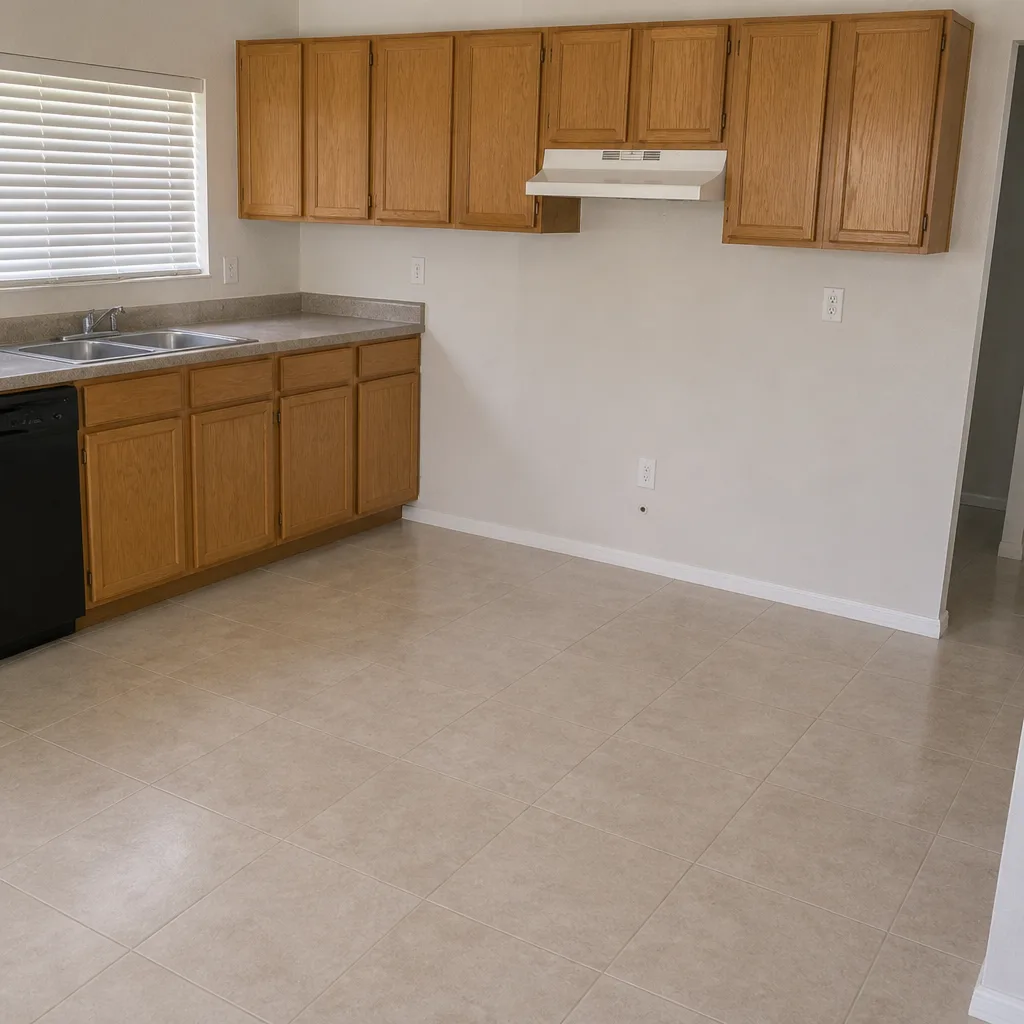 After
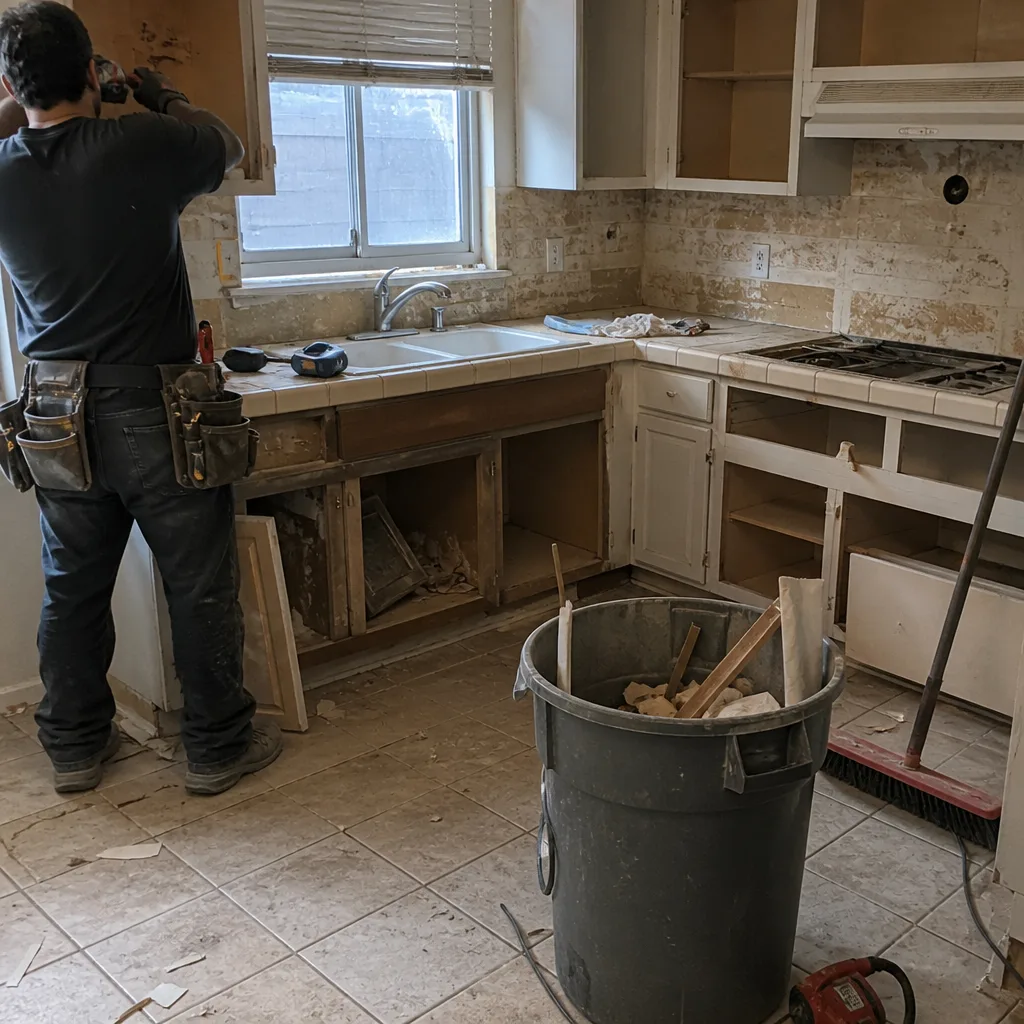 Before
 After
 Before
 After